











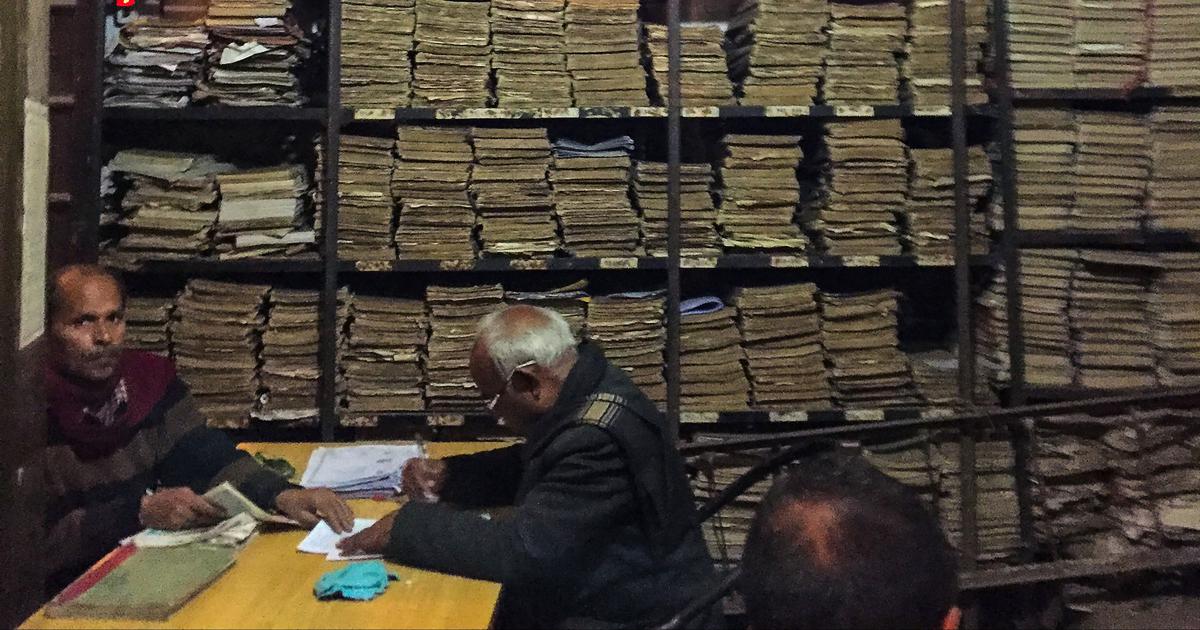
For decades, the Indian judiciary has been described as a “leaking tap” – a system where the inflow of new cases consistently outpaces the rate of disposal, leading to a staggering backlog of over five crore cases.
While solutions, ranging from increasing the number of judges to digitising records, are frequently proposed, the most potent weapon against pendency already exists in the statute books: the restriction on adjournments.
If Indian courts were to strictly follow the “Rule of Three” as mandated by law, the judicial system can radically transform from a marathon of delays into a sprint toward justice.
Culture of adjournment
The legal framework for curbing delays is surprisingly robust. Order XVII, Rule 1 of the Code of Civil Procedure explicitly states that no more than three adjournments shall be granted to a party during the hearing of a suit.
The newly enacted Bharatiya Nagarik Suraksha Sanhita has tightened the screws on the criminal side, capping adjournments at two. The law even mandates that costs must be imposed on the party seeking the delay.
However, a “culture of adjournment” has turned these mandatory provisions into mere suggestions. In practice, the average case in a subordinate court sees between 12 and 30 adjournments. If the judiciary were to bridge the gap between law and practice, the impact on court disposals would be exponential.
Time cost
To understand how following the law will reduce the backlog, one must look at the “time cost” of a single adjournment. Every time a case is adjourned, the court’s administrative machinery – from the peshkar to the stenographer – spends time re-scheduling, re-notifying, and re-filing. Multiply this by 30 listings a day, and a judge spends nearly half their working hours merely managing a calendar rather than adjudicating merits.
If courts followed the law of strictly limiting adjournments to three, the disposals will increase by over 25%. Right now, the average increase in the pendency is less than 3% per year. It is easy to see that each year the pendency will reduce instead of increasing. When the “exit” from the system is sped up through faster disposals, the backlog begins to drain naturally.
Deterrent effect
Adjournments are rarely sought for genuine emergencies. They are frequently used as a strategic tool. Litigants with a weak case use “date-seeking” to exhaust the resources of their opponent or to wait for witnesses to lose their memory or interest. When courts ignore the legal limit on adjournments, they inadvertently subsidise this behaviour.
If the law were followed, the “strategic adjournment” would disappear. Lawyers will be forced to come prepared, and litigants will know that their day in court is fixed.
This will have a deterrence effect where frivolous litigation decreases because the strategy of waiting it out is no longer viable. Following the law will clean the docket of cases that exist only because they are allowed to linger.
Salem Advocate paradox
The primary hurdle to this reform is a 2005 Supreme Court ruling in the Salem Advocate Bar Association case, which held that the three-adjournment limit is not absolute and can be bypassed in “extraordinary circumstances”. Though intended to ensure justice is not sacrificed for speed, this exception has become the rule.
To truly tackle the backlog, the judiciary must redefine “extraordinary”: an unwell lawyer or a missing file are routine administrative hurdles. If courts began treating the “Rule of Three” as a hard boundary – by imposing heavy, deterrent costs for any deviation – the legal fraternity would adapt. Professionalism will increase as the “adjournment culture” decreases.
The Socio-Economic Dividend
The backlog is also an economic problem. It is estimated that judicial delays cost India nearly 1.5% to 2% of its gross domestic product annually. Land is locked up in litigation, contracts are unenforceable and capital remains stagnant.
A court system that follows the law on adjournments will provide a fixed timeline. For an investor or the average citizen, knowing that a dispute will be settled in a fixed number of hearings is more valuable than the outcome itself.
By clearing the backlog through procedural discipline, the judiciary would unlock frozen assets and restore public faith in the rule of law.
Discipline as reform
The Indian judiciary needs to follow the laws it already has. The “Rule of Three” is a ready-made solution for the pendency crisis. Increasing the number of judges and adopting artificial intelligence are long-term goals but they are supply-side fixes. Restricting adjournments is a process-side fix that does not require a new budget, infrastructure or legislation.
If judges say no to the fourth adjournment request, the message will ripple through the legal system. India’s mountainous judicial backlog will start looking far more manageable. In the battle against pendency, the most revolutionary act a judge can perform is simply to follow the law. Can Indian courts be persuaded to follow the law and refuse the fourth adjournment?
Shailesh Gandhi is a former Central Information Commissioner.
